Monday, February 26, 2007

It was good to be afflicted...

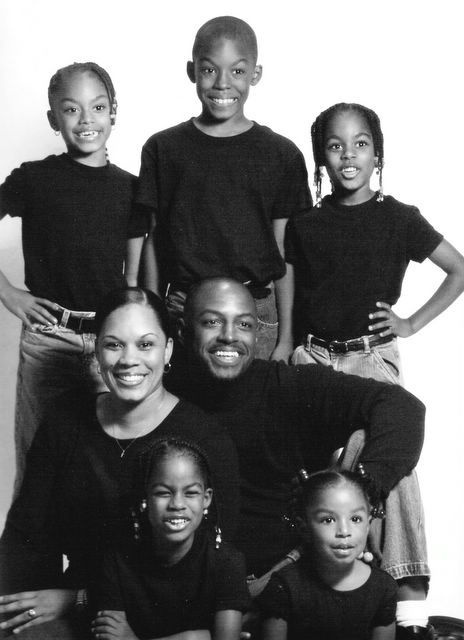
Since last Thursday I have been down with the flu. I happens about this time every year. My mother keeps telling me that I need to get a flu shot, but I keep reminding her that we should reserve the flu shots for those who really need them, you know, the older folks. But I am beginning to realize that maybe I am joining the ranks of the older folks. Besides, with five active children and a ministry that has me visiting and speaking with people who have active children, I have become accustomed to working in and through sickness. Yet, this time, God made sure I was sat down. I have spent the last couple of days in the bed, and though it was hard not getting out to pursue my passions, I was reminded just how loving and lovely God is when He afflicts us. The Psalmist said, "It is good for me that I was afflicted, that I might learn your statutes" (Ps. 119:71). Uncontrollable sneezing, nasal congestion with headaches, nausea, and sleepless nights are not good things. And yet, they result in the good of me praying, meditating, and trusting in God. It is good that He loves me enough to do to me what I need, that I might know that He loves me. And during this bout with sickness God has particularly reminded me that He especially loved me in given me my wife.

Yesterday I was suppose to be at church preaching from Matt. 5:1-5 on the Beatitudes. As you can guess, I was not able to do it. I had spent all week with the first three beatitudes, had discussed them during our family devotion time, and had read several books on the subjects. I believe I was quite familiar with the beatitudes and quite confident in preaching them. And then I discovered one that I had taken for granted and had to be reminded of it. Perhaps you are not familiar with it (probably because it does not pertain to you), but I hope you will indulge this mostly healed preacher as he takes a little license and shares with you this new beatitude. It says, "Blessed is he who is married to Adriane, for he is beloved by a faithful wife." She has given herself to me during my sickness in ways of which I am not worthy. She has served me and our family and has not once complained or drawn back - ever asking if there is anything more she could do. Amazing Love, how can it be, that God would send such a wife to me. This almost recovered sinner is loved by God through a loving wife. This again is why I say "It was good to be afflicted."
...But it still hurts when I sneeze.

Thursday, February 22, 2007

Youth Ministry to the Glory of God

The modern Youth Ministry Movement has lost its way. What started out as a noble idea, has grown into a problem that often feeds itself. Anyone who is actively involved in youth ministry, if they were honest, would have to admit that this is true. Nevertheless, they would also admit that they are at a lost for knowing what to do about it. Therefore, the modern youth ministry goes on. Yet, Voddie Baucham does not think it has to. He has is publishing a series of articles on Youth Ministry that I am convinced we need to read:

Youth Ministry I
Youth Ministry II
Youth Ministry III
Answering Objections on the Youth Ministry Issue
What's a Youth Minister To Do (pt. 1)
What's a Youth Minister To Do (pt. 2)

Monday, February 19, 2007

Happy Presidents Day

For our country today is a holiday. Today we take the time to recognize the invaluable contributions our Commanders-in-Chief have made to our beloved country. In particular we recognize the two greatest presidents we have had (and number three is so far behind that he is not worth mentioning in the same breath), George Washington and Abraham Lincoln. And for my money, Lincoln stands as the pinnacle of our highest political office. Was he perfect? Of course not. Any man who would aspire to and obtain the office of President would surely have his faults exposed, and Lincoln did. Nonetheless, in the realm of imperfect men to sit in the White House, Lincoln ranks at the head of the class. Here are a couple of resources on Abraham Lincoln that I would recommend this Presidents Day.
Lincoln's Greatest Speech. Of all the books I have read and listened to on Abraham Lincoln this is my favorite. It is my favorite because it deals with what I believe is the greatest presidential address ever given, Lincoln's Second Inaugural Address, and it gives insight into the philosophical and religious influences upon Lincoln as he struggled to make sense of the Civil War. I believe you will be richly surprised by this book. Check it out.

Was Lincoln A Christian? I am not one to argue one way or another for the supposed spirituality of dead leaders. Those who do not like Lincoln will make the argument that he was not a Christian. Those who admire him will make the argument that he was. I find that after the arguments are made, Lincoln's accomplishments and his words to us still ring true (much in the save way as Martin L. King, Jr.). Nevertheless, if you are interested, Dr. D. James Kennedy has given a message entitled Was Lincoln A Christian? Part one aired on Friday and part two is airing today on Truths That Transform. If you have never heard Dr. Kennedy give one of his biographical addresses, you should do so. I believe he is excellent in his delivery of these messages.

Thursday, February 15, 2007

Damnable Heresy

Desiring God posted an article by John Piper entitled, "Prosperity Preaching: Deceitful and Deadly." In the article Piper asks preachers not to develop a philosophy of ministry that is deceitful and ultimately deadly because it misrepresents the promises of God and the call of Christ. I commend Piper for the brief article, and once again Piper is willing to say some things that equally prominent white (reformed) evangelicals seem reluctant to say. However, being as familiar as I am with the prosperity gospel, and knowing family and friends who are deceived by this heretical teaching, I would suggest that Piper's words do not go far enough. While he is right in pleading with pastors not to teach prosperity, just warning those who read his material is not enough. We must we willing call it more than deceitful and deadly. We must be willing to call it what it is - DAMNABLE HERESY. And those who teach it - HERETICS.

While we debate about NT Wright and the various and nefarious perspectives on Paul, people flock to see Benny Hinn by the thousands. While we argue about the ecclesiastical errors of the Emergent Church and the exegetical fallacies of Open Theism, Creflo Dollar and Eddie Long are building worldwide empires on the backs of people being duped by the desire to be prosperous. We must ask ourselves the question, "what are the more pressing heresies of our day: the New Perspective Teachings or the Health and Wealth Teaching?" Look at any list of the most influential and popular preachers in America and you will find the list littered with Prosperity Preachers. Yet, you will be hard pressed to find on that list an advocate of the New Perspective on Paul. In fact, I would venture to say that most on the list could not even tell you what it is.

I am not saying that these other issues (i.e. New Perspective, Open Theism, Emergent, etc.) are not important. They are. I am saying however, that they garner far too much of the evangelical (reformed) debate and ink in light of their relative insignificance in broader Christianity. Therefore, I believe we need men like Piper to say what he said and more. We need other prominent (reformed) evangelicals to say what Piper has said and more. This is no light matter. And in case you believe I may be overstating the case, check out this horrific video from none other than Dr. Creflo Dollar himself. He is not ashamed to call it as he sees it, why are we?


What say you?


HT: PP

Tuesday, February 13, 2007

Augustine Key to Reformation

In speaking of the necessary and hopeful reformation within the predominantly black church, our brother Scotty Williams has suggested that Saint Augustine may hold the key.

Wednesday, February 07, 2007

Samuel Rutherford this Morning

In my continual reading of The Letters of Samuel Rutherford this morning, I came across this wonderfully encouraging passage on temptation. Rutherford writes:

I find it most true, that the greatest temptation out of hell is to live without temptations. If my waters would stand, they would rot. Faith is the better for the free air and the sharp winter-storm in its face. Grace withereth without adversity. The devil is but God's master-fencer, to teach us to handle our weapons.

Sunday, February 04, 2007

An Elder's Home

(If the link does not work, click on the "articles" tab. You should be able to find it)
One of the hot issues plaguing the predominantly black church is the issue of the Pastors/Elders and their families. We have not done a good nor faithful job in living out within the church the demands of Scripture upon the Elders and Pastors, particular as it relates to families. Our pulpits are full of men who have been divorced (a time or two or three) and whose children have long seen the hypocrisy of their fathers and have either joined in the charade or have rebelled against him. This is one area that definitely needs reform and Reforming. Here is an excellent article from Nine Marks entitled Unbelief in an Elder's Children - Practice. If we ever begin taking serious the Scriptural mandates for Elders and Pastors in 1Timothy and Titus, we would begin to see reform right before our eyes. But alas, too many of our people would not love to have it so.

Thursday, February 01, 2007

What manner of man is this?

I know I am in the middle of a brief series on Reforming the Black Church, but this is just too scary pass up. Did you know he was here? Make sure you check out the video.

Reforming the Black Church: Institution or Individual?

"The Black church in America is an enigma. It's an institution who existence is unlikely and unpredictable. How could African-American men and women embrace the same Christ that their oppressors professed? Despite the worst intentions of many and because of the best intentions of others, the Black church, as an institution, is arguably the most indomitable in American history" (On Being Black and Reformed, p. 46).

Those words grew out of the understanding that the predominantly white church and predominantly black church in America are inextricably tied together. Without the evangelistic efforts (good) and the sinful prejudices (evil) of the White church in American we would not have a "black church." It could be argued that there would be not African Methodist Episcopal (AME) Church if the Methodist had not been racist in their practices. There would be no National Baptist Convention (NBC) or even Church of God in Christ (COGIC) is their white sister organizations had been operating in brotherly love and kingdom principled. But alas, they were not and thus we have a segregated church. The pasts of white and black Christians is tied together. And I believe so are their futures. This is why I believe to ask the question of reform in the one is the beg the question of reform in the other.

Now, in his second post on Can the Predominantly African-American Church be Reformed, our brother and friend Thabiti has written some hard and true indictments of the black church. Without a doubt, his assessment will be met with some opposition, and yet his thoughts do not come out of mid air, but are the result of experiencing these errors and examining them in the light of the Scriptures. When I read Thabiti's assessment I find myself agreeing with him, even though something inside me did not want to. Being a son of the black church, I love my heritage, and yet I know all too well the errors that have plagued our churches and Thabiti have hit many them square on. And yet, I remain hopeful, not because I think it is possible to Reform the predominantly African-American church but because I believe Reformation is possible and is happening in Black Christianity.

The Black Church in America is institutionalized, make no mistake about it. What I mean by that is that it has been long established, it has its traditions (good and bad - though mostly bad on the theological side) and has found success in accomplishing many of its goals. It is a self-sufficient entity and therefore, while it may be willing to adjust from within, it is not likely to make any sweeping changes because of theological pressures from without. Thus, to look on it at face value it may appear that reforming the black church in America is not likely. However, I would suggest that reforming the predominantly black church should not be the goal. The goal should be to bring Reformed Christianity to black Christians. If I thought the goal should be the reforming of the institutionalized black church (e.g. the NBC, AME, and COGIC), I would despair at such a monstrous task. But I don't see the task as reforming the institutionalized church, but rather that of reforming Black Christianity. I am convinced that the prospect of reforming Black Christians is not only doable, but has already been done. I am a living witness.

When I state the goal as reforming black Christians more so than reforming the black church, I mean that our goal should be the introduction of reformed theology to individual men and women, boys and girls, more so than the introduction of reformed theology to the established, institutionalized Black church. I believe that if we can, by the grace of God, get Reformed theology in the hearts and minds of black individuals, then we will either begin to see a change in the historical black church, or we will see another "black (reformed and biblical) church" rise up along side her. Whatever the case, the key is the individual not the institution.

Wednesday, January 31, 2007

Reforming the Black Church...

is it possible? This is the question raised by our brother Thabiti over at Pure Church. It is indeed an important question and one that surely deserves our attention.

I honestly believe that we have the awesome privilege of witnessing and even participating with an awakening of sorts in our day. Reformed theology is once again being faithfully preached and taught in a wider and ever-growing populace. There is energy and excitement around biblical theology once again as more and more churches and individuals are coming to see the dearth of theological reflection that has been so popular in the church and are awakening to the truth and experiential depth that is Reformed Theology. And as Reformed theology has found a wider audience in our day, it should not surprise us that this interest and rise includes the rise of Reformed theology within the predominantly black church.

And yet, as some blacks begin to embrace true biblical and historical theology, the question necessarily arises, "Can the Black church in America be Reformed?" While this is a question dear to my heart, before I address it at any length (in future post), I must first add this caveat to the question. In all honesty, the question is actually a question that should be asked of the rest of the Christian church in American, even as it is asked of the predominantly Black one.

Can the Church in America be Reformed? It is easy to look at some of the debilitating error of the Black church and miss that at some level the Black church in America is a reflection, almost microcosm, of the greater Christian expression in America. The vast majority of white churches in America need the theology of the Reformation as much as the Black church. The vast majority of white churches in America are full of erroneous theology and practices as are the black churches. In fact, it could be argued that the hindrances to bringing reformed theology to predominantly white churches is actually greater that it is in the predominantly black church.
For example, according to George Barna and his associates, black Christians in America are more likely to attend church, read their Bibles, believe the Bible is true, pray and fast, believe in the sovereignty of God over all of life, and trust the word of their preachers more than white Christians (see George Barna and Harry Jackson in High Impact African-American Churches). These statistics would seem to suggest that it would be easier to bring Reformed theology to people in Black churches than it would be to bring it to people in White churches.

Subsequently, to ask the question of the Black church is to beg the question for the White church. Alas, if the Black church in America can not be reformed, what hope is there for the predominantly White church? What hope do we have for Christianity in America? Well, actually a lot. And in fact, it may lie in examining the possibility of Reformed theology within the broader Black Christian context. I will examine this point next.

Monday, January 29, 2007

Prophets in the Land?

For some reason I have come across some rather provocative sermons lately. Here, however, may be the most provocative of them all. I am not familiar with this gentleman; but one thing is for sure, he does not care. He only desires that you hear this message.

(And Louis, you told me that there were no more prophets today. Do you wanna rethink that?)

Sunday, January 28, 2007

Solus Christus

I have been doing a little work in with the Five Solas of the Reformation lately. I came across this wonderful quote from Calvin in the Institutes. It sums up Solus Christus (Christ Alone) as only Calvin could:

"We see that our whole salvation and all its parts are comprehended in Christ (Acts 4:12). We should therefore take care not to derive the least portion of it from anywhere else. If we seek salvation, we are taught by the very name of Jesus that it is “of him” (1Cor. 1:30). If we seek any other gifts of the Spirit, they will be found in his anointing. If we seek strength, it lies in his dominion; if purity, in his conception; if gentleness, it appears in his birth. For by his birth he was made like us in all respects (Heb. 2:17), that he might learn to feel our pain (cf. Heb. 5:2). If we seek redemption, it lies in his passion; if acquittal, in his condemnation; if remission of the curse, in his cross (Gal. 3:13); if satisfaction, in his sacrifice; if purification, in his blood; if reconciliation, in his descent into hell; if mortification of the flesh, in his tomb; if newness of life, in his resurrection; if immortality in the same; if inheritance of the Heavenly Kingdom, in his entrance into heaven; of protection, if security, if abundant supply of all blessings, in his Kingdom; if untroubled expectation of judgment, in the power given to him to judge. In short, since rich store of every king of good abounds in him, let us drink our fill from this fountain, and from none other." (Institutes of the Christian Religion, Book 2, Ch. 16, Sec. 19)

Friday, January 26, 2007

More of Voddie's Message

Thanks to a heads up from our friend Chuck, you can read some of the family worship distinctives of Grace Family Baptist Church, where Voddie Baucham serves. Also, some of you have expressed a desire to hear the rest of Voddie's message. You can listen to rest of the message here.

Thursday, January 25, 2007

At Home Youth Ministry

Here is a message (powerful and controversial) by Voddie Baucham that was recently brought to my attention. Voddie has a passion and pleasure for the family. In Voddie I hear a man with whose heart I can identify. I have been saying much of what Voddie is saying in this message, but I just never have said it so clearly and convincingly. And so I thank God for Voddie's insights. This message was given to a group of Southern Baptist pastors and he challenged them to rethink youth ministry and the need to develop and support what I like to think of as Home Youth Ministry. The message is called The Home is the Key. Check it out. But be warned, Voddie does not play nice with our churches' popular understanding of ministry to our children.

Tuesday, January 23, 2007

Abortion As Racism

It is a known fact that the majority of Planned Parenthood clinics are in the areas where there is a predominantly African-American population. It is also a known fact that the percentage of aborted African-American babies is drastically disproportionate to the percentage of African-American women in this country. It would not be hard to deduce from these facts and others that racism has a part in the continuing rise of African-American abortions. It is also not hard to see, as one writer put it, that the abortion industry is decimating the black community.

This past weekend, John Piper preached a sermon, When Abortion is Racism, in which he decried the inherent racism in the increasing disproportionate numbers of abortions among African-Americans. May the holocaust of the unborn be a continuing cry of African-American preachers until we hear all those newly conceived babies cry for themselves. And may our churches be places where women and men can come and have the blood of the unborn washed from their guilty consciences by the blood of Jesus.

Monday, January 22, 2007

Ghostbuster?

Growing up in a rural African-American family, our lives were surrounded by myths and legends of the seen and unseen. I could tell you countless stories of the unexplained and unexplainable that have been past down through generations of my family. Most of the stories were merely folklore that provided interesting conversation for the young people as we listened attentively and fascinated by the stories of our elders (besides, in the woods of northern Michigan, there wasn't a lot of interesting things going on). I have long lost faith in most of the stories, though from time to time I past them along to my children in hopes of giving them a sense of our history and provide them with questions to ask their grandmother. Yet, there are a few of tales that continue to intrigue me because I can remember a few odd incidents occurring when I was present. Yet, apparently my family is not the only one who has tales of ghosts and the paranormal.

One of our favorite restaurants in the Atlanta area is The Green Manor. It is an old plantation house that has been turned into a restaurant that offers one of the finest buffets of southern cooking you will find anywhere. According to the good folks at The Green Manor, not only is there good food on the grounds, but there is also a rather friendly ghost residing there. Apparently some ghostbusters have been called in to search out for the apparition. All I know is that the next time I am at The Green Manor, I will let them know that I will take the the turkey, ham, dressing, sweet potatoes, and peach cobbler, but they hold the ghost.

Saturday, January 20, 2007

Radical vs. Regurgitation

Anthony Bradley has written another thought-provoking (as he is want to do) article entitled Wanted: Black Reformed Churches That Radicalize Beyond Regurgitation. Without a doubt, Bradley is one of the more progressive yet grounded theological minds we have today. And to God's glory he's Black and Reformed (or should I say Reformed and Black, Mike? :-). Check out the article. Anthony always gives interesting fodder for theological and cultural reflection.

A Short History of Being Black and Reformed

Dr. Bob Price is the Home Missions ministry team leader for all Christian Reformed black ministries in the Christian Reformed Church. I have had the pleasure of getting to know Bob over the last few years and have found him to be a brother of geniune faith and insight. He has written a brief article entitled A Short History of Being Black and Reformed for their denominational magazine Banner. It seems that Bob has the seedlings for a book here. I for one hopes he pursues it.

Tuesday, January 16, 2007

On the Cross of Christ

This morning Samuel Rutherford reminded me of the beauty of bearing the cross of Christ. Rutherford suffered much for the cause of Christ and has much to teach us in our dangerous comforts of life:

"O how sweet are the sufferings of Christ for Christ! God forgive them that raise an ill report upon the sweet cross of Christ. It is but our weak and dim eyes, and our looking only to the black side, that makes us mistake. Those who can take that crabbed tree handsomely upon their back, and fasten it on cannily, shall find it such a burden as wings unto a bird or sails to a ship."

Monday, January 15, 2007

Strength to Love

I grew up listening to Dr. King's speeches and sermons. By the time I was in high school, I could quote many of his more famous sermons verbatim. Without a doubt, Dr. King's oratory skills had a profound effect upon me and my subsequent development as a preacher. People may not always agree with Dr. King's theology and may question some of his politics, but there is no questioning the fact that he was a first rate orator. And yet, not only was he a great orator, but he was a fine writer and a most erudite man. Anyone who would take the time to read The Letter from Birmingham Jail and realize that the letter was written on paper that was smuggled in to him and that he had no literary resources available to him, one would have to admit that Dr. King's mind and heart were full of knowledge and passion. The Letter from Birmingham Jail is a undeniable classic piece of American literature. Yet, for me, my favorite writings of Dr. King are in the book Strength to Love. This a collection of some of his more powerful and insightful sermons concerning America and the Civil Rights Movement.
I first came in contact with Strength to Love during my freshman year of college. And it has been a staple in my library ever since. I have read it and reread it countless time. I have referenced it directly and indirectly in my writings and preaching. I not only learned about the mind of Dr. King, but Dr. King through these sermons introduced me to other intellectual and spiritual giants, whom he quotes.

Admittedly, Dr. King's theology leaves a bit to be desired. His misrepresentation of Calvinism, Reformed theology, and particularly the doctrine of total depravity in his sermon "The Answer to a Perplexing Question," is not to be expected of a man with such learning. His assessment was indeed a caricature of the truth of Calvinism and probably the result of interactions with liberal professors and his own political expedience. Nevertheless, I won't dismiss Dr. King because he lacked theological acuteness. I don't read King for that. I read King so as to be inspired by his pathos and his ability to articulate that passion in words. King reminds me that true theological/biblical preaching must not be dry and ordinary. If he could use colorful, inspiring words for the cause of Civil Rights, how much more should I strive to use them for the cause of Christ. Here is an example and one of my favorite passages from his sermon Loving Your Enemies:
To our most bitter opponents we say: "We shall match your capacity to inflict suffering by our capacity to endure suffering. We shall meet your physical force with soul force. Do to us what you will, and we shall continue to love you. We cannot in all good conscience obey your unjust laws, because noncooperation with evil is as much a moral obligation as is cooperation with good. Throw us in jail, and we will still love you. Bomb our homes and threaten our children, and we will still love you. Send your hooded perpetrators of violence into our community at the midnight hour and beat us and leave us half dead, and we shall still love you. But be ye assured that we will wear you down by our capacity to suffer. One day we shall win freedom, but not only for ourselves. We shall so appeal to your heart and conscience that we shall win you in the process, and our victory will be a double victory."

My edition of Strength to Love is an old hardback edition published shortly after Dr. King's death. I have worn it out pretty good. Some of the pages have been taped together and the binding is not as strong as it once was. Nevertheless, the words are still intact and never cease to make an impact on me no matter how many times I read them. If you are looking for some way to remember Dr. King and his message this year, do yourself and all those around you a favor and read Strength to Love. It may strengthen your resolve to love as Christ did and to preach with more passion for HIM.